


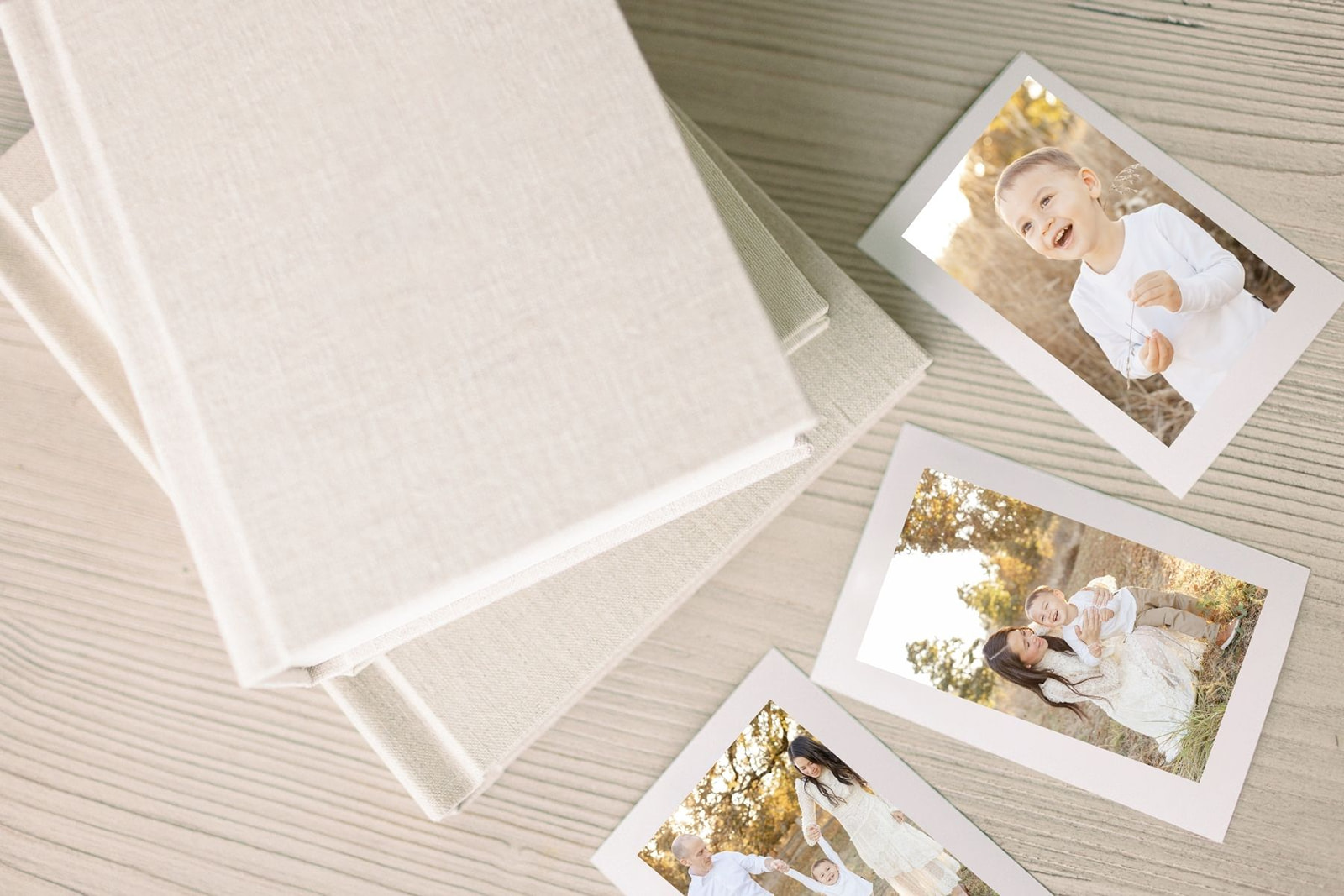
There is a moment that happens after your family photo session is over. The images arrive. You scroll through them on your phone, feeling everything at once. The way your child looked at you. The way your partner reached for your hand without thinking. The way your baby curled into your chest as if the rest of the world did not exist.
And then life picks back up, and those images stay right where they are. On a screen. In a folder. Waiting.
Here is the truth I share with every family I work with: photographs were never meant to live on a device. They were meant to live with you. On your walls. In your hands. Woven into the everyday rhythm of your home.
The families I photograph often tell me, long after their session, that what they treasure most is not the digital file. It is the framed print above the couch. The album their children pull off the shelf and flip through on a rainy afternoon. The wall that greets them every morning and reminds them of who they are and where they belong.
If you have beautiful family photos sitting in a folder somewhere, this post is for you. Let’s talk about how to bring them into your home in a way that feels intentional, personal, and lasting.
Table of Contents
- Why Displaying Family Photos Is More Important Than You Think
- Creating a Gallery Wall That Feels Like Your Family
- Heirloom Albums: The Gift That Gets Passed Down
- Smaller Framed Prints for Intimate Spaces
- Ledge Shelves: Flexible and Layered Display
- Accordion Books and Smaller Keepsakes
- How to Choose the Right Display for Your Home
- Working With a Photographer Who Thinks About This From the Start
- Ready to Create Something That Lasts?
- Frequently Asked Questions About Displaying Family Photos
Why Displaying Family Photos Is More Important Than You Think
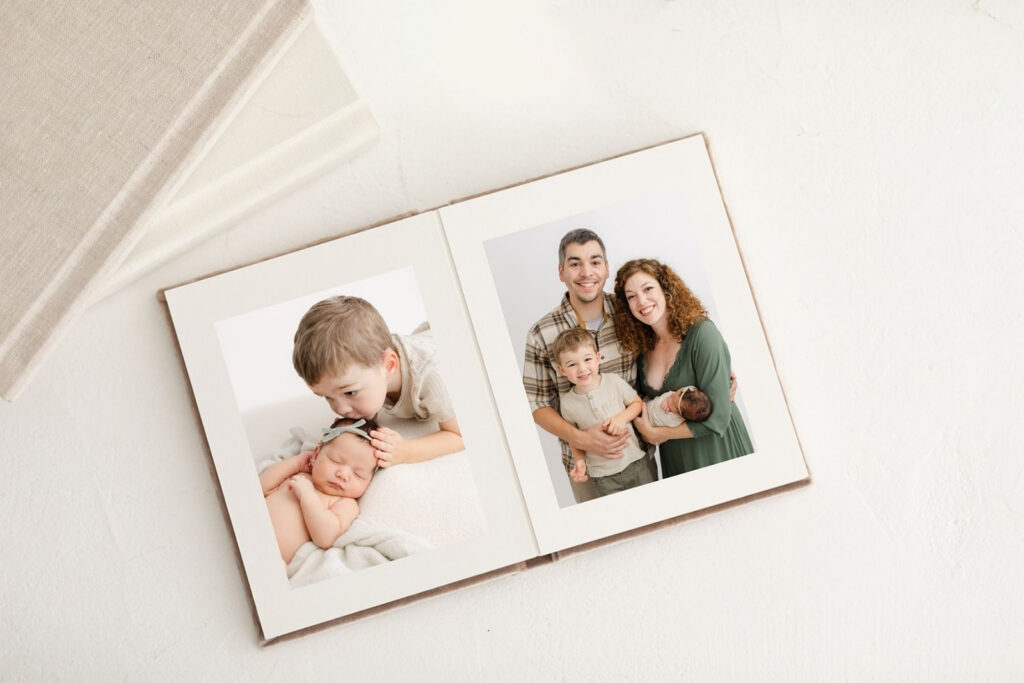
Before we get into the specific ways to display your images, I want to pause on something that rarely gets said clearly enough.
Photographs displayed in the home do something that digital files simply cannot. They remind your children, every single day, that their family’s story is worth celebrating. Research in developmental psychology consistently shows that kids who grow up surrounded by family photos have stronger senses of identity and belonging. Not because of the frames or the print quality, but because of what it communicates: you matter, this family matters, and we are proud of this life we have built together.
When I design artwork with the families I work with through my Portland family photography experience, I always ask where they want their images to live in their home. Not because I need the information, but because it changes how they think about their photographs. It shifts the question from “which ones do I like?” to “which ones do I want to wake up to every day?”
That shift is everything.
Creating a Gallery Wall That Feels Like Your Family
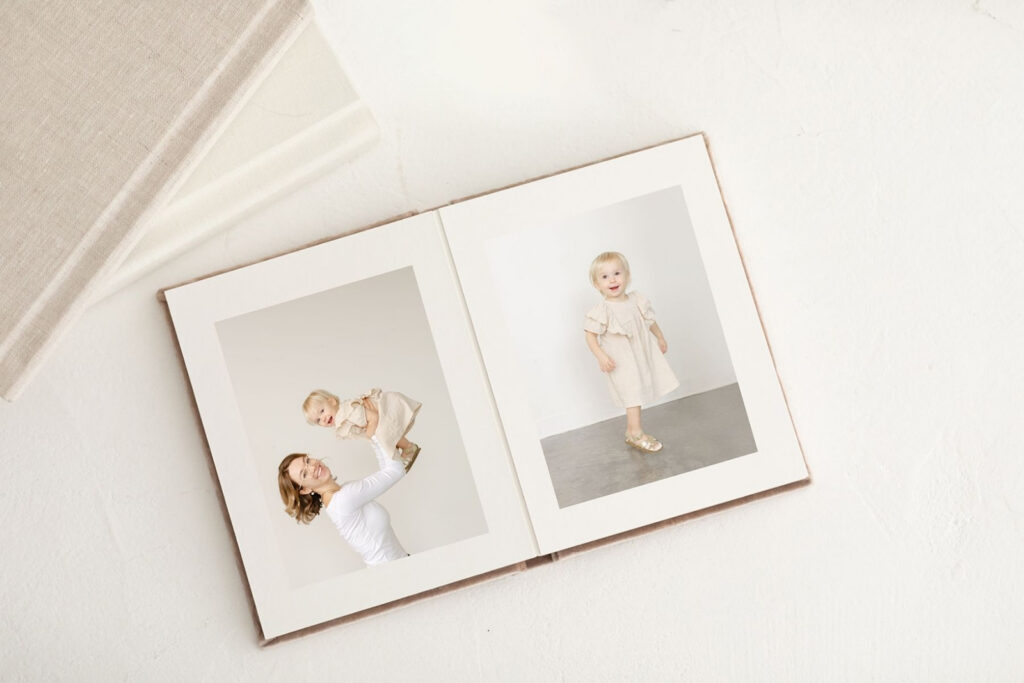
A gallery wall is one of the most personal and visually impactful ways to display family photos, and it works beautifully in almost any home aesthetic. Done thoughtfully, a gallery wall does not feel like a collection of random frames. It feels like a cohesive story told across your wall.
The key is intentionality.
Start by choosing a wall that gets natural attention, an entryway, a living room wall, or the hallway leading to bedrooms. These are the spaces your family moves through every day, and they are the places where your photos will have the most meaning.
When it comes to frames, consistency matters more than matching. You do not need every frame to be identical, but choosing frames in the same finish, whether that is a warm wood tone, a matte black, or a classic white, creates visual harmony without feeling rigid. Mixing sizes adds dimension, and layering a few vertical portraits alongside horizontal images keeps the arrangement feeling dynamic.
For families who love the editorial, refined aesthetic, I recommend limiting the palette to two or three tones across your prints. Because my studio work is grounded in neutral, timeless portraiture, images from your family photo session tend to integrate seamlessly into minimalist and modern interiors alike.
Before committing to nails, lay your frames out on the floor first. Arrange and rearrange until the grouping feels balanced. You can also trace each frame onto paper, cut out the shapes, and tape them to the wall to preview placement. It takes an extra hour, and it is absolutely worth itLarge-Scale Statement Prints That Anchor a Room
If a gallery wall feels like too much decision-making, a single large-scale statement print is one of the most sophisticated ways to display family photography. One image, done beautifully, can carry an entire room.
Statement prints work best when the image itself is emotionally compelling. A quiet moment between you and your newborn. A candid of your children running toward you in golden light. A portrait of your whole family that documents something true about who you are together.
The format matters here too. Canvas wraps have a painterly warmth that suits organic, nature-inspired interiors. Fine art prints behind glass feel clean and editorial. Metal prints offer a luminous, contemporary finish. There is no single right answer, but there is usually one that feels most like you.
When choosing the size, err larger than you think you need. What feels oversized on a laptop screen often disappears on a wall. A print that feels bold in the store becomes perfectly proportioned once it is hung in context.
I guide every family through this process during their ordering appointment. We look at your images together, talk about your home, and design something that genuinely belongs there.
Heirloom Albums: The Gift That Gets Passed Down
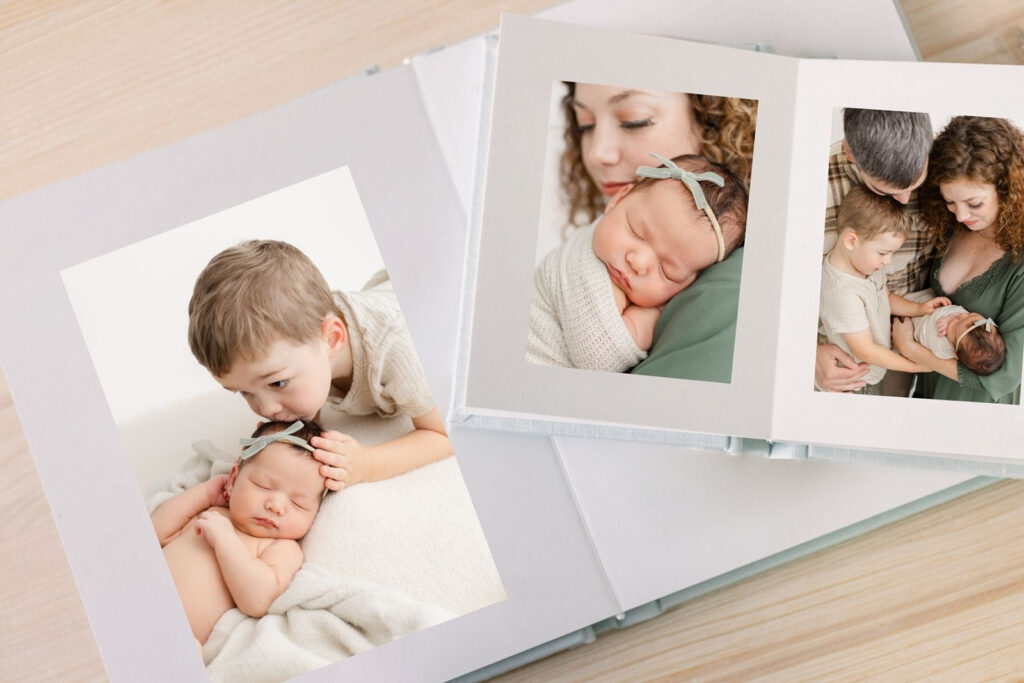
There is something about holding a physical album that a screen will never replicate.
The weight of it. The texture of the linen cover. The way the pages turn. The smell of the paper. Albums engage all of your senses in a way that makes the memory feel immediate and real, even years later.
Heirloom albums are the product I am most proud to offer, and they are consistently what my clients describe as the most meaningful part of their entire experience. I have watched parents tear up while holding their baby’s newborn album for the first time. I have heard from families whose children, now grown, still keep their childhood family album on their bookshelves.
A well-made album becomes a family artifact. It gets passed down. It becomes part of your legacy.
When designing an album, the layout is as important as the images themselves. Each spread should flow naturally, telling the story of your session from beginning to end. Images breathe when they are given space. Overcrowding a spread dilutes the emotion. The design I create for each family is custom, not templated, because no two families tell the same story.
If you are a Portland family considering how to preserve your images, an album is the one product I will always encourage you to invest in. It is not a luxury. It is the thing your grandchildren will hold someday.
Smaller Framed Prints for Intimate Spaces
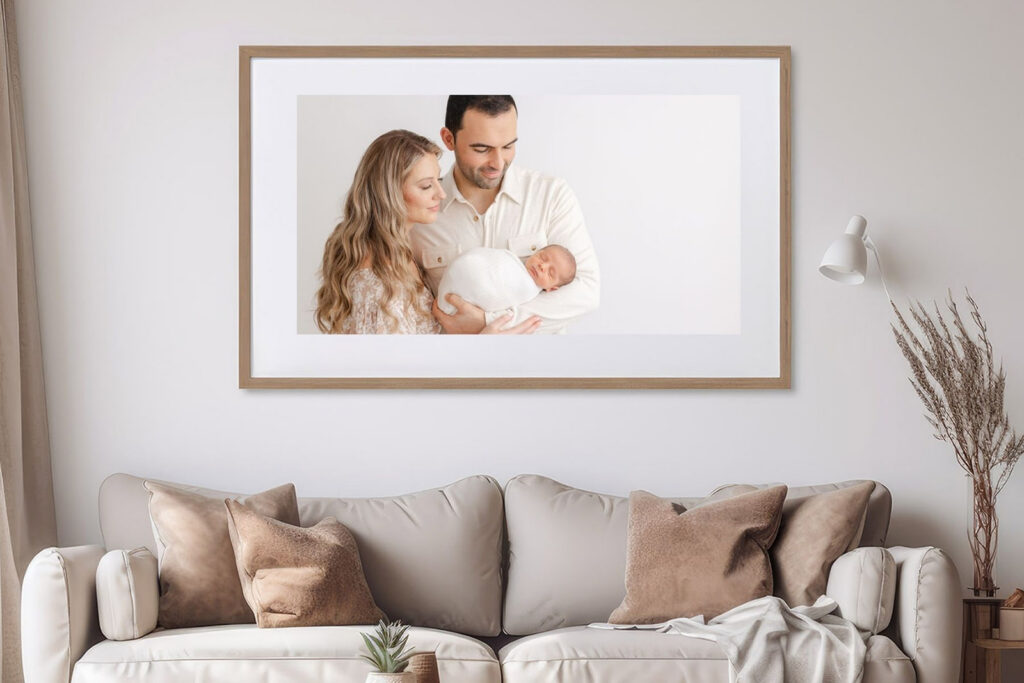
Not every photo needs a grand display. Some of the most meaningful moments belong in quieter corners of your home.
A small framed print on a bedroom nightstand. A trio of images on a bathroom shelf. A single portrait tucked into a home office bookcase. These smaller displays create moments of warmth throughout your home that you discover again and again, the way you might rediscover a handwritten note tucked into a book.
For nurseries and children’s rooms, smaller framed prints at child height are especially beautiful. Seeing their own image, and the faces of the people who love them, at a scale they can actually take in is something deeply comforting for young children.
These are also wonderful ways to incorporate photos from different seasons. A newborn photo session print alongside a family photo from the following year. A maternity portrait framed next to the image of the baby who arrived after. Together, they become a quiet visual timeline of your family’s story.
Ledge Shelves: Flexible and Layered Display
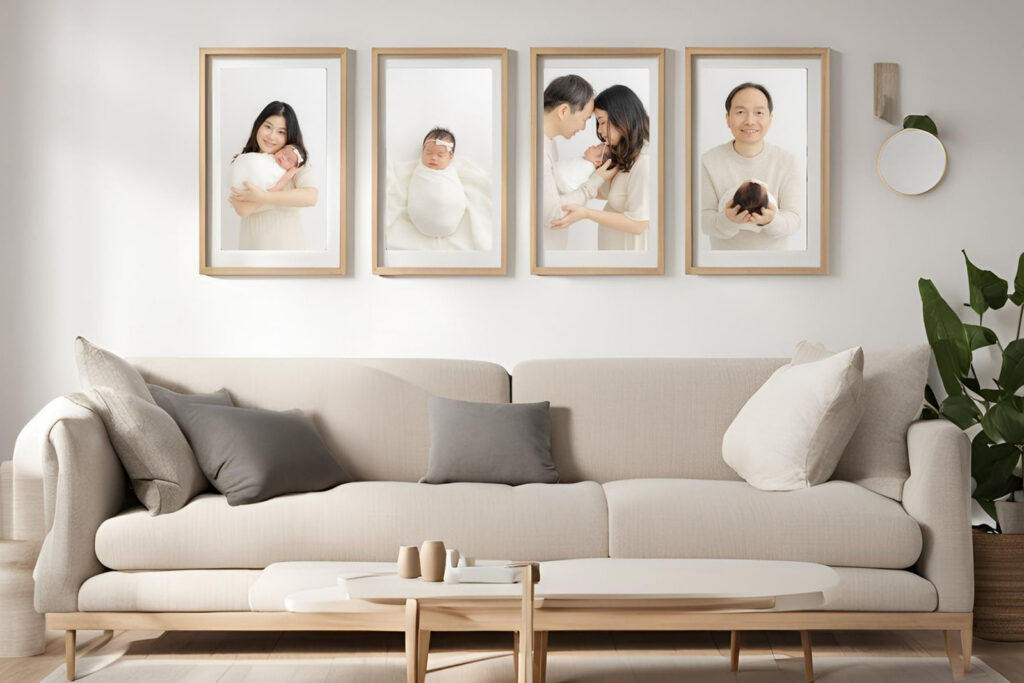
Photo ledges have become one of the most popular ways to display family images because they offer something traditional framing does not: flexibility.
With a ledge, you can layer frames in front of one another, mix prints with small objects, and rearrange everything without putting new holes in your wall. As your family grows and your photos evolve, your display can grow with you.
Ledges work especially well in living rooms, entryways, and along staircases. They allow you to rotate seasonal images without committing to a permanent arrangement, which makes them ideal for families who love updating their displays as their children grow.
A simple approach that always works beautifully: choose frames in one or two finishes, vary the sizes, and keep the images themselves cohesive in tone and mood. Because my work is consistently neutral and timeless, images from multiple sessions over the years tend to look intentional together rather than mismatched.
Accordion Books and Smaller Keepsakes
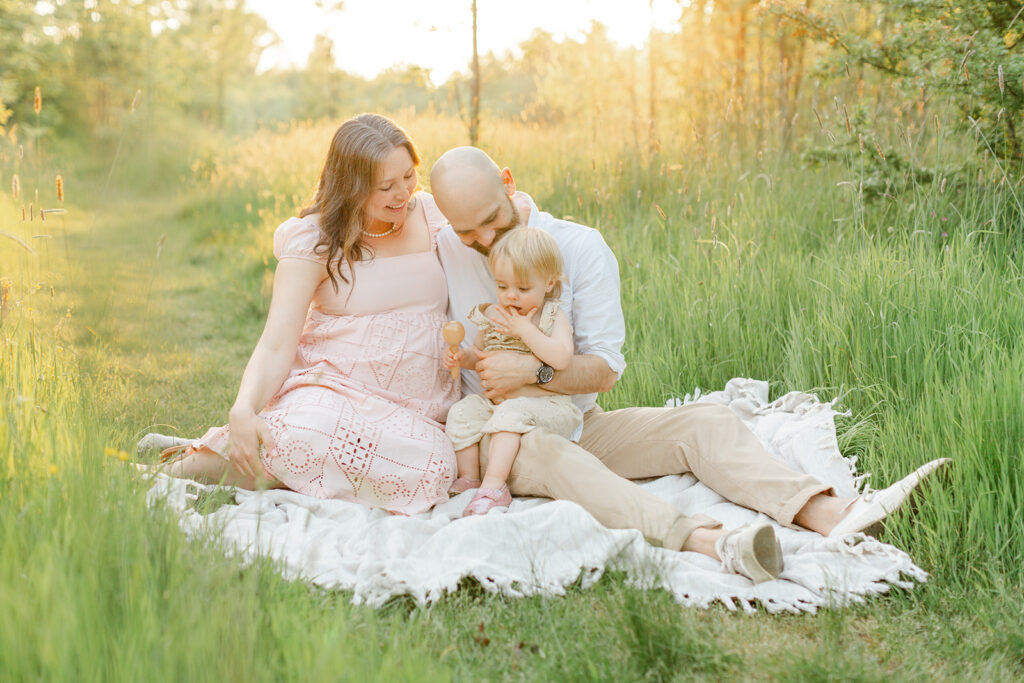
In addition to full heirloom albums, smaller accordion-style photo books are a wonderful complement to a larger display. They are easier to pick up and flip through, which means they get used, and that is ultimately the point.
These compact books are also beautiful gifts. Grandparents, aunts, and uncles often treasure a small, curated collection of family images in a form they can hold and share. A set of prints tucked into a keepsake box makes a deeply personal gift that no candle or gift card can come close to matching.
For milestone sessions, especially first birthday sessions or six-month portraits, smaller accordion books that document a baby’s first year are some of the most beloved products families receive. Watching a child flip through images of their own first year, still too young to fully understand what they are looking at but clearly enchanted, is one of my favorite things to witness.
How to Choose the Right Display for Your Home
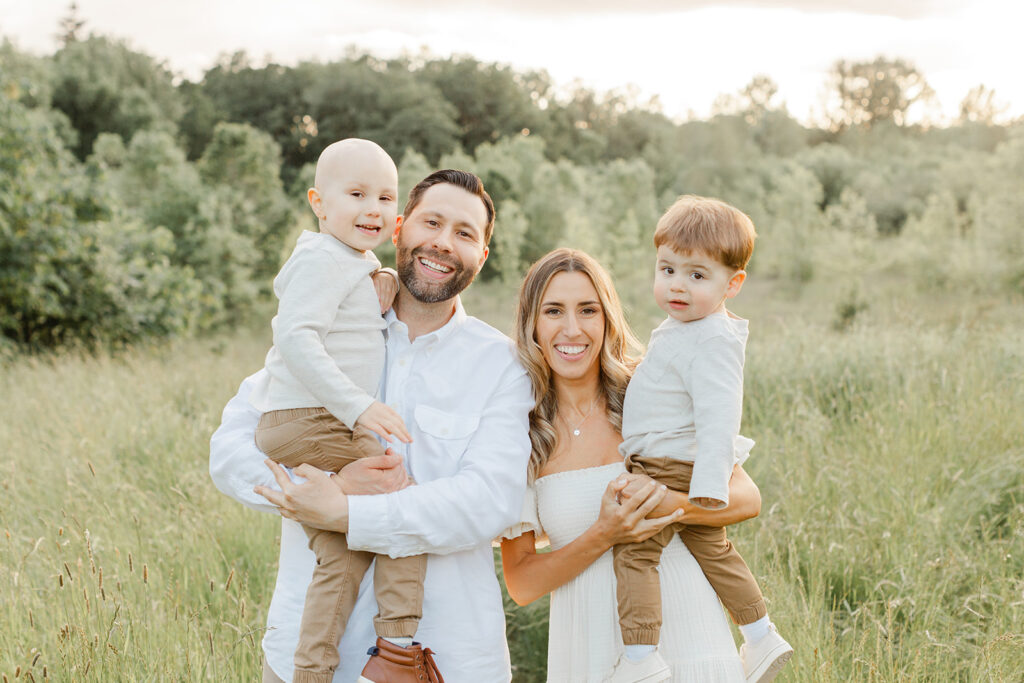
If you are feeling overwhelmed by the options, here are a few questions to help you focus:
- Where do you spend the most time in your home? Start there.
- What is the overall aesthetic of your space? Clean and modern, warm and organic, or layered and eclectic? The display style should feel like an extension of what is already there.
- Who do you want to experience these photos? If the answer is everyone who walks through your door, a gallery wall or statement print near the entryway is ideal. If the answer is your family alone, quieter, more intimate placements in bedrooms and living spaces may feel more meaningful.
- How much flexibility do you want? Permanent framed prints and albums stay where they are. Ledge displays and accordion books invite rearrangement and sharing.
There is no wrong answer. The best display is the one that actually gets done, that actually lives in your home and becomes part of your daily life.
Working With a Photographer Who Thinks About This From the Start
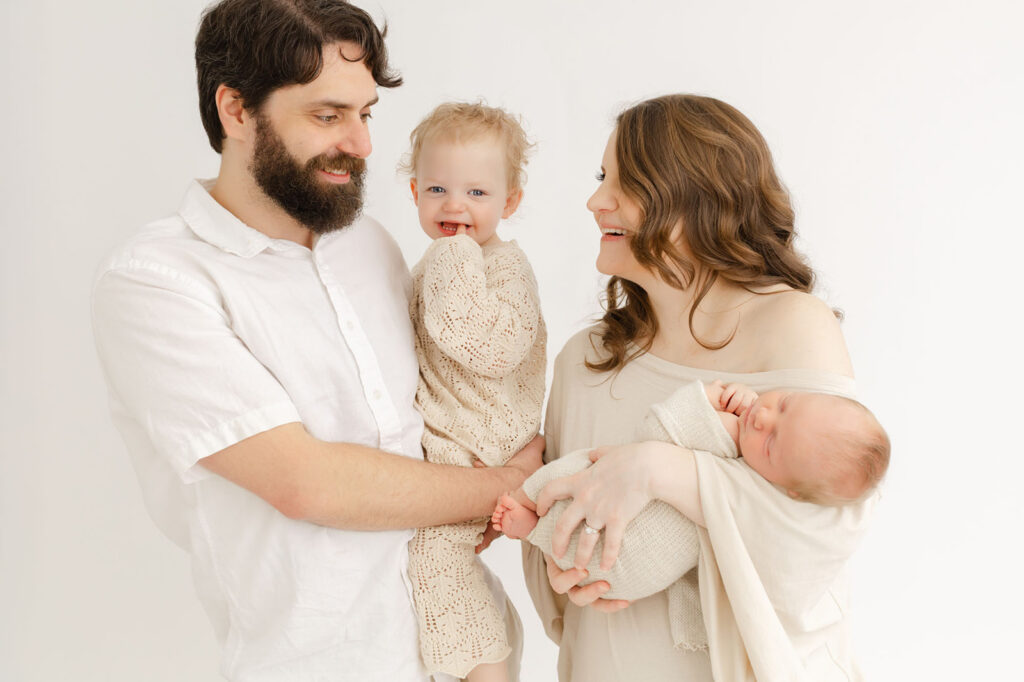
One of the things that makes the Ashlie Behm Photography experience different is that we think about display before your session ever begins. During our planning process, I ask about your home. I ask what walls feel empty to you, what aesthetic you love, and how you imagine living with your images.
That conversation shapes everything. From the way I photograph your family to the way I design your album and recommend your prints, every choice is made with your home in mind.
My goal has never been simply to create beautiful images. It is to create beautiful images that actually make it onto your walls, into your hands, and into your family’s story for generations.
Because the photographs you hang in your home today are the heirlooms your grandchildren will hold someday. And that is worth doing with intention.
Ready to Create Something That Lasts?

If you have been holding onto beautiful family photos that have not yet found a home on your walls, I hope this gave you somewhere to start.
And if you are still searching for a photographer who approaches every session with both artistry and longevity in mind, I would love to connect with you.
At Ashlie Behm Photography, I serve families throughout Portland and the surrounding area who value photography that becomes more than a digital file. If you are expecting, welcoming a newborn, or ready to document your family exactly as you are right now, I would be honored to be part of your story.
Reserve your session here and let’s create something your family will live with for a lifetime.
Frequently Asked Questions About Displaying Family Photos
What is the best way to display family photos in a small home or apartment?
Smaller spaces benefit enormously from intentional display choices. A single large-scale statement print can make a small room feel curated and complete without overwhelming it. Ledge shelves are another excellent option because they use vertical wall space efficiently and can be rearranged without damage to walls. In very small spaces, choosing one or two powerful images rather than many smaller ones tends to have far more visual impact.
How do I choose between canvas, metal, and fine art paper prints?
The choice depends largely on your home’s aesthetic and the mood of the image. Canvas wraps feel organic and painterly, which works beautifully in warm, nature-inspired spaces. Fine art paper prints behind glass have a clean, editorial quality that suits modern and minimalist interiors. Metal prints offer the most luminous finish and work well in contemporary spaces with clean lines. When you work with me through the ordering process, I help guide this decision based on your specific images and your home.
How many photos should be in a gallery wall?
There is no fixed number, but a gallery wall generally needs enough images to feel intentional rather than sparse. Starting with a central anchor image and building outward tends to create the most balanced arrangements. The frames should feel cohesive in finish, even if they vary in size. If you are unsure, I always recommend starting smaller and adding over time rather than filling a wall all at once.
Is it worth investing in a professional album, or are digital files enough?
This is one of the most important questions I am asked, and my answer is always the same: digital files are a starting point, not a destination. Albums are held, shared, and revisited in a way that digital files are not. They are also significantly more durable over time. A professionally printed and bound album, stored properly, will outlast any device. I have never met a family that regretted investing in an album. I have met many who wished they had.
3 Best Beaches Near Portland for Your Summer Family Photos
Why Every Portland Family Should Schedule an Annual Photo Sessions
Portland’s Seasonal Guide to Family Photos: Spring Flowers, Fall Colors and More
Leave a Reply











Leave A Comment